Australian Cost of Living vs. Residential Cruising: A Full Breakdown
Is living on a residential cruise ship cheaper than renting in Sydney or Melbourne? We compare real 2026 costs across Australia's biggest cities with all-inclusive life at sea.
Australian Cost of Living vs. Residential Cruising: A Full Breakdown
Australia is one of the most expensive countries to live in. Between surging rents, rising grocery prices, and steep healthcare premiums, many Australians, and especially retirees, are quietly asking: is there a better way?
One answer that's gaining traction globally: residential cruising. Living full-time on a cruise ship, with meals, entertainment, healthcare, housekeeping, and global travel all bundled into a single monthly cost.
In this guide, we compare the real cost of living in Australia's five largest cities against three residential cruise programs, complete with interactive charts, so you can see exactly how the numbers stack up.
What Does It Really Cost to Live in Australia in 2026?
Australian living costs have risen sharply over the past few years. According to data from the Australian Bureau of Statistics, migration agencies, and cost-of-living trackers, here's what a single person can expect to spend per month across major cities.
Monthly Cost of Living by City
Total monthly expenses for a single person living comfortably (AUD, 2026)
Includes rent, utilities, groceries, dining, transport, healthcare, entertainment & personal expenses
City-by-City Breakdown
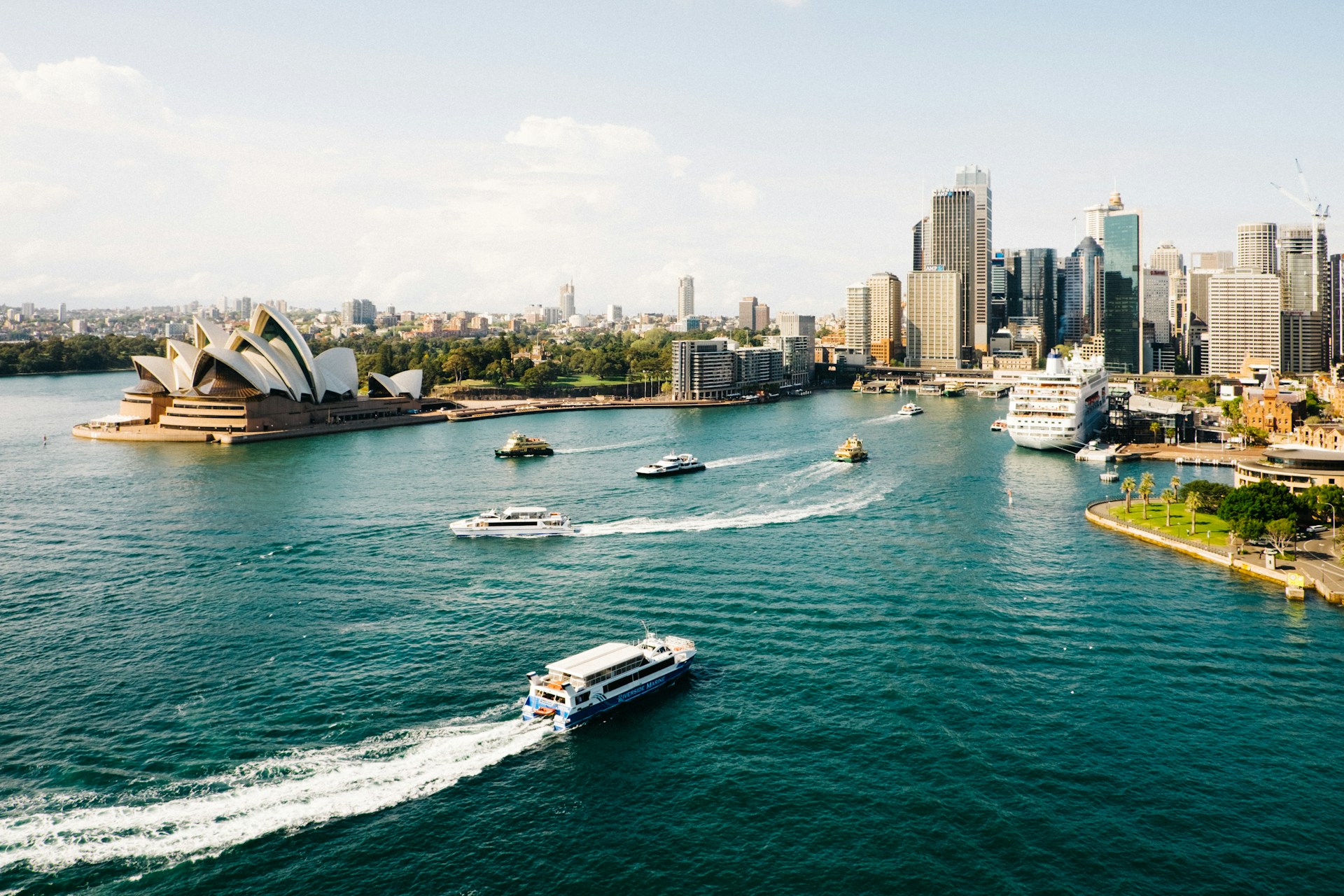
Sydney remains Australia's most expensive city. Average rent for a one-bedroom apartment in the CBD sits around A$2,880/month. Add groceries (A$400–500/week for comfortable eating), transport (A$220/month for an Opal card), utilities, healthcare, and lifestyle spending, and you're looking at roughly A$5,800/month for a comfortable, not lavish, lifestyle.
Melbourne comes in slightly lower at around A$4,800/month. Rents in the inner city average A$2,350/month, and while food and transport are marginally cheaper than Sydney, the overall cost still adds up quickly.
Perth has seen costs rise with the mining boom. At roughly A$4,400/month, it's now more expensive than Brisbane, driven primarily by housing costs and the higher price of imported goods.
Brisbane offers a more moderate cost at around A$4,100/month, though rapid population growth from interstate migration is pushing rents upward.
Adelaide remains the most affordable of the big five at approximately A$3,600/month, though even here, housing costs have increased by over 15% in the past two years.
What Does Residential Cruising Cost?
Residential cruise programs vary significantly in pricing, amenities, and ownership structure. Here are three representative options available in 2026:
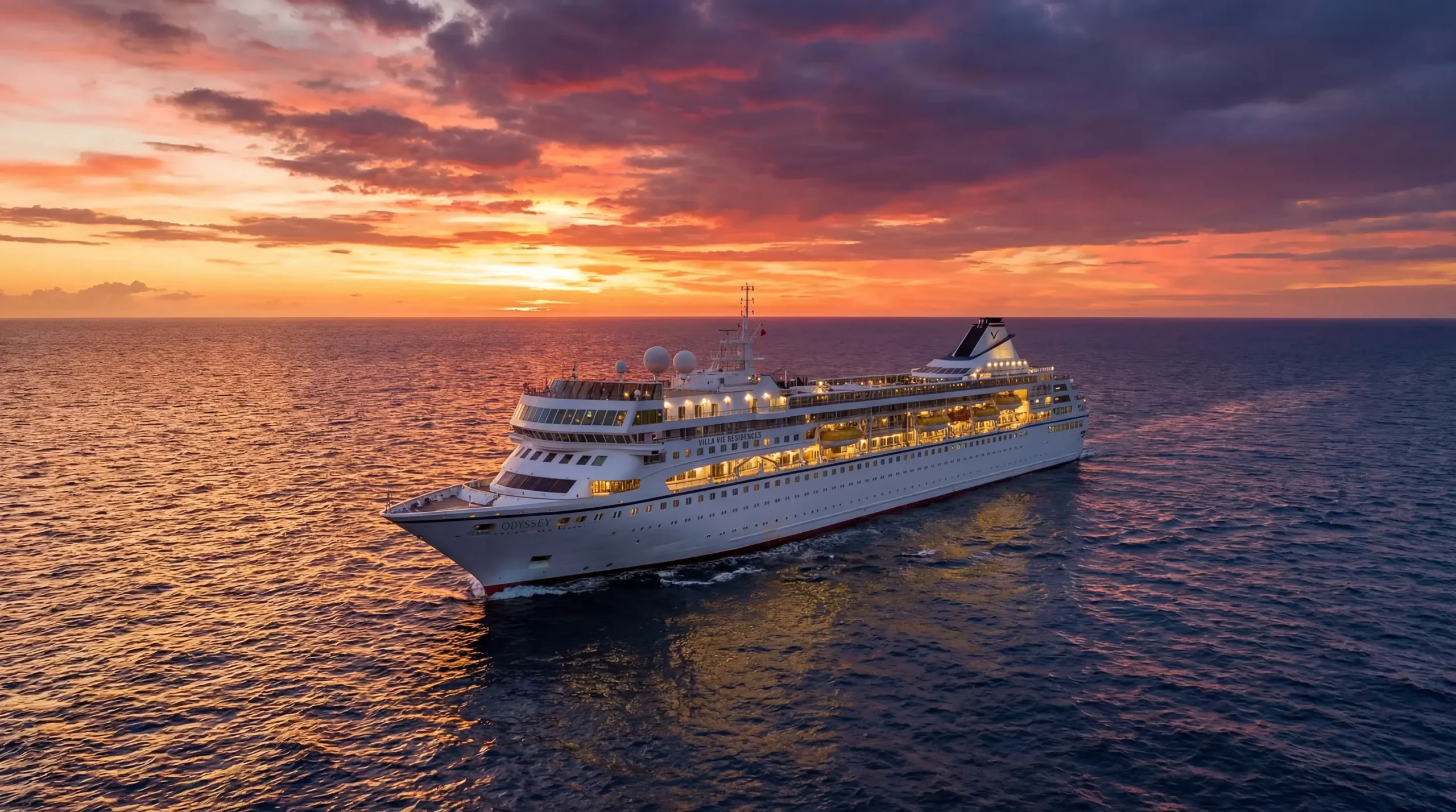
Villa Vie Residences: From ~A$3,100/month (double) or ~A$4,600/month (solo)
Villa Vie offers the most accessible entry point into residential cruising. Their Endless Horizons program provides lifetime access with no monthly fees for a single upfront payment. Their 5-Year Ownership program starts from just US$59,999 with monthly fees from US$3,299/month (≈ A$5,100) for double occupancy or US$4,499/month (≈ A$6,900) solo. Full Ownership starts at $129,999 with lower monthly fees from US$1,999/month (≈ A$3,100) for double occupancy. Monthly fees cover all meals, housekeeping, entertainment, port fees, and basic WiFi.Avora Residences: From ~A$12,900/month (solo)
The Avora Lumina (formerly Seven Seas Navigator) positions itself as a luxury residential cruise. Monthly fees for owners start at US$8,355/month (≈ A$12,900) solo for the Dawn Suite under full ownership (purchase price: $545,000). This includes fine dining across multiple venues, a full spa and fitness centre, Starlink WiFi, gratuities, and laundry. Avora sits at the premium end of the market with fees going up to US$31,525/month for the Lumina Suite.Victoria Cruises: From ~A$7,400/month
Victoria Cruises offers all-inclusive monthly rentals (no ownership required) starting at US$4,799/month (≈ A$7,400) for an Inside Stateroom, covering accommodation, all meals, unlimited entertainment, medical consultations, WiFi, housekeeping, and uniquely, alcoholic beverages. Solo travellers receive a 20% discount (~A$5,900/month). Note: Victoria's status is currently paused.Head-to-Head: Australian Cities vs. Residential Cruises
Here's where it gets interesting. When you line up the total monthly cost of living in an Australian city against the all-inclusive cost of a residential cruise, the gap is much smaller than most people expect, and in some cases, the cruise is cheaper.
Australian Cities vs. Residential Cruises
Monthly cost comparison: cruise costs include meals, housing, travel & entertainment (AUD)
Key Takeaways
Where Your Money Actually Goes
The most revealing comparison isn't the total. It's the breakdown. In Australian cities, your money is fragmented across rent, groceries, transport, healthcare, and entertainment, each with its own inflation trajectory. On a residential cruise, it's one payment covering everything.
Where Your Money Goes
Cost breakdown: Australian cities vs. residential cruise all-inclusive pricing (AUD/month)
Cruise “All-Inclusive” covers housing, meals, entertainment, travel, housekeeping & more
What the Breakdown Reveals
In Sydney, housing alone eats nearly 50% of your monthly spend. Add food and transport, and you've used up 70% of your budget before any entertainment or lifestyle spending.
On a residential cruise, that single "All-Inclusive" bar covers:
There are no hidden electricity bills. No water rates. No council fees. No car registration, insurance, or petrol costs. No home maintenance surprises.
The Hidden Australian Costs That Tip the Scale
When most people compare living costs, they forget about the expenses that don't show up in monthly trackers but significantly impact your annual budget:
Property-Related Costs (If You Own)
Transport Costs
Healthcare Gaps
Add these up and the true cost of Australian living can be A$500–1,500/month higher than the headline figures suggest. Residential cruises include most of these by default.
Who Should Consider the Switch?
Residential cruising isn't for everyone, but the financial case is strongest for:
Retirees
If you're spending A$4,000–6,000/month in an Australian city, you could be living aboard a residential cruise ship for the same money, travelling the world, with meals cooked for you, a built-in social community, and zero home maintenance.Remote Workers
With Starlink WiFi now standard on most residential ships, digital nomads and remote professionals can work from anywhere. The cost is comparable to renting in Melbourne or Perth, but your office view changes every few days.Downsizers
If you're sitting on Australian property equity (the median house price in Sydney is over A$1.4 million), selling and transitioning to residential cruising can free up significant capital while dramatically simplifying your lifestyle.Snowbirds & Seasonal Escapees
Many residential cruises follow the sun, Caribbean and South Pacific in winter, Mediterranean and Northern Europe in summer. No more Australian winters if you don't want them.Frequently Asked Questions
Is this comparison in Australian Dollars?
Yes. All figures are in AUD. Cruise costs were converted from USD at approximately 1 USD = 1.54 AUD (March 2026 rate).Do cruise costs include everything?
Most residential cruise costs cover housing, all meals, entertainment, housekeeping, and port fees. Some extras like alcoholic beverages, spa treatments, and private excursions may cost additional. The "all-inclusive" label varies by operator: compare operators here.What about Australian healthcare (Medicare)?
If you leave Australia for extended periods, Medicare coverage may be affected. Most residential cruise ships have onboard medical facilities, and medical evacuation insurance is recommended. Some operators include basic healthcare in their fees.Can I try it before committing?
Yes. Some operators offer rental programs, no ownership commitment required. Fabled Voyages offers monthly rentals from US$7,500/month (≈ A$11,550), and Villa Vie offers various ownership terms. Victoria Cruises advertises rentals from A$7,400/month, though their status is currently paused.What happens to my Australian property?
Many residents sell their property and use the equity to fund residential cruising. Others rent out their Australian home for passive income while living aboard. A financial advisor familiar with expat taxation can help structure this optimally.The Bottom Line
The numbers don't lie: residential cruising is financially competitive with Australian city living, and in many cases, it's outright cheaper for what you get.
For the price of a comfortable life in Melbourne or Brisbane, you could be waking up to a new destination every few days, dining in multiple restaurants, enjoying daily entertainment, and never worrying about a utility bill or leaking roof again.
The question isn't really whether you can afford residential cruising. For many Australians, the question is whether you can afford not to consider it.
Keep exploring: Read our detailed monthly cost breakdown covering every operator's fees, inclusions, and real budget scenarios. New to the concept? Start with our complete beginner's guide to residential cruising.
Curious which residential cruise fits your budget and lifestyle? Take our matching quiz to find your perfect match, or explore all operators to compare options.
Have a question about this? Just ask me.
I'm Peter, and I've helped hundreds of people figure out whether residential cruising fits their life and budget. Send me an email and I'll reply personally, usually within a day. No sales pitch, honest answers only.